EFFECT OF MOBILE MONEY IN CASHLESS TRANSACTION ON THE FINANCIAL PERFORMANCE OF SMALL AND MEDIUM ENTERPRISES IN BENUE STATE NIGERIA
Amu Samuel Iorlumun* and Answem Aondona Benjamin2
Department of Vocational and Technical Education, Benue State University, Makurdi, Nigeria 1*
Benue State University Teaching Hospital, Makurdi, Nigeria2
Accepted 20, June 2025
The study investigated the effect of mobile money in cashless transaction on the financial performance of SMEs Benue State Nigeria. Three specific objectives with corresponding research questions guided the study and one hypothesis formulated and tested at 0.05 level of significance. The study employed descriptive research design. 150 registered businesses with Benue State Ministry of Commerce Trade and Investment were sampled using purposive sampling technique. The instrument were designed questionnaire tagged “Questionnaire for effect of mobile money in cashless transaction on the financial performance of SMEs (EMMCTFPSME)” were used. The Questionnaire was validated by experts and the reliability was established using Cranbach Coefficient Alpha Method which yielded a coefficient of 0.79. Correlation and Simple Regression were used to test the corresponding hypotheses The findings established that mobile money and its transaction has increased the sales volume, credit and debt management of SMEs in Benue State which in turn has an impact on their financial performance. Thus, this study recommends that SMEs should embrace the innovation in the banking sector to take full advantage of advancement in technology to increase their financial performance to maximize their profits.
Keywords: Mobile money, cashless transaction, financial performance, SMEs, Benue State.
INTRODUCTION
The global business environment is tremendously changing exhibiting enormous enthusiasms, which are driven by the increasingly changing innovations in the area of Information and Communication Technologies (ICT). The innovations have continued to permanently alter the rules of the disposed and expectations of the new digitized highly inter-linked economies operating in a to a certain extent global village. As Cassidy (2002) rightly points out, the notions of trans boundary trade as practiced traditionally have undergone dramatic changes to appreciate and embrace, though at times reluctantly, the rising number of trade-related activities and financial transactions, which occur purely and significantly through the Internet and technologically enhanced tools for information and communication.
The unprecedented penetration of mobile devices, wireless networks and mobile communication services has allowed the Nigerian SMEs to enjoy cashless, payments and marketing systems only available to the huge organizations and government corporations in the past.
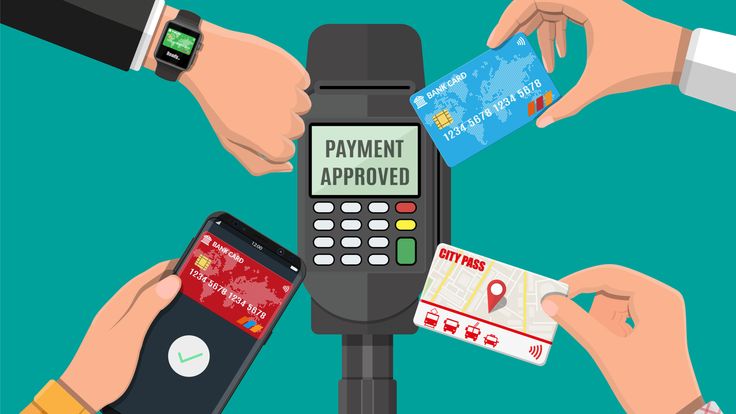
Cashless Transactions involve payment for goods and services by use of credit cards, debit cards, mobile devices and electronic funds transfer instead of use of hard cash or checks. Cashless transactions attract operation fees; debit and credit card application charges and electronic transfers also attract charges depending on whether it’s a local or foreign transfer. The wide-ranging economic developments of the previous decade such as the integration of world economies have made a significant impact towards increasing the mobility of the working populace and their families. At the same time, technological developments especially in the field of telecommunication have made it possible to offer innovative, location sensitive services on ubiquitous basis to customers on the move (Tiwari et al., 2006).
Nigeria clinch the cashless system of payment in line with the global payments advancement also the Central Bank of Nigeria (CBN), which is the apex regulatory body of the banking sector, came up with a form of policy to check the increasing dominance of cash in the banking sector in order to enhance e-payment system in the economic landscape. Cashless system of payments and instruments are significant contributors to the broader effectiveness and stability of the financial system. Innovations in technology and business models have implications for the efficiency and safety of cashless system of payments. Cashless system of payment is defined as a society where transactions is functioning, and operated or performed without using coins or banknotes for money transactions but instead using credit cards or electronic transfer of funds (Humphrey, 2004). Cashless economy is cheap where transactions can be done without necessarily carrying physical cash as a means of exchange of transaction but rather with the use of credit or debit card payment for goods and services. The nation’s quest of migrating from cash to cashless economy has been on the front flame. Experts have posited that to meet the target of becoming one of the leading world economies by the year 2020, hard work must be made to embrace electronic payment system in its whole. Cashless transactions have been on the rise in the recent years due to deregulation and rapid technological advances in information flows, communications infrastructure and financial markets.
Inventions of the internet and mobile technology are key information communication technologies that have enhanced the manner of doing business in recent years. Micro enterprise operators in Nigeria have adopted the use of the mobile payments as a way of managing their business because of the relative affordability of mobile phones and the mobile banking services they offer (Mbogo, 2010). “Mobile money” is money that can be accessed and used via mobile phone (Jenkins, 2008). Mobile money can be used to settle a variety of transactions conveniently and it transforms the mobile phone into a mobile wallet. To access Mobile Money Transfer Services (MMTS), a customer must first register at an authorized mobile money transfer retail outlet of a mobile network operator offering MMTS. The customer is then assigned an individual electronic money account that is linked to his phone number and accessible through a SIM card-resident application on the mobile phone. Customers can deposit and withdraw cash to/from their accounts by exchanging cash for electronic value at a network of retail stores (often referred to as agents). Once money is on the virtual account, the phone becomes a mobile wallet. Micro enterprises view payment through MMT as an easier form of cash delivery to their suppliers and business partners, a system which is relatively affordable, personal and can be used anywhere and at any time (Adedokun 2017).
SMEs awareness in adopting this mobile payments in cashless transaction has been faced with challenges of socio-cultural environment and other social vices associated with electronic payments. As a result of this, the study try to determine the effect of mobile money in cashless transaction on financial performance of SMEs in Benue State with a view to exposing the issues relating to it, challenges, as well as the prospects.
STATEMENT OF THE PROBLEM
Innovations is one among the unique challenges faced by SMEs due to the nature of their tasks, transactional services for money are not always attended by banks due to their numerous nature, banking services are tedious also, they lack proper mode of receipts and payments, debt collection procedures and access to finance and this makes them to be faced with problems associated with liquidity and working capital management. This situation is likely to have an effect on the growth and performance of the SMEs.
The mobile banking technology innovation is considered easy to use as well as effective and trustworthy with vast capabilities to spread monetary services to the unbanked or those inclining toward less expensive financial packages (Iravonga, 2018). Encouraging the growth, development and financial performance of the local small and medium enterprises is a welcome idea for the varied stakeholders in the sector including the government. A number of studies conducted on Nigerians SMEs mainly focused on the sector’s contribution to the economy in terms of employment, income, and gross domestic product (Pam, 2021) while other studies focused on access to credit and government policy and strategy frameworks (Pam, 2021). However, there has been no known research to the knowledge of the researcher that has studied the effect of mobile money transactional services on small and medium enterprises financial performance in the study area. This study therefore sought to investigate the effects of mobile money in cashless transaction services on Small and Medium Enterprises’ financial performance in Benue State Nigeria.
PURPOSE OF THE STUDY
The purpose of this study was to find out the effect of mobile money in cashless transaction on financial performance of the SMEs within Benue State Nigeria.
Objectives of the Study
- To examine the percentage of the SMEs in Benue State that use mobile money in cashless transaction to carry out their business.
- To find out the frequency by which SMEs in Benue State use mobile money in cashless transaction to carry out their business.
- To determine the effects of mobile money transaction services in cashless operation on sales revenue of SMEs within the Benue State.
RESEARCH HYPOTHESIS
Ho: there is no statistical significant relationship between mobile money transactions and sales revenue of SMEs in the Benue State.
LITERATURE REVIEW
Concept of cashless transaction
Cashless economy does not mean a total elimination of cash as money will continue to be a means of exchange for goods and services in the foreseeable future. It is a financial environment that minimizes the use of physical cash by providing alternative channels for making payments. Contrary to what is suggestive of the term, cashless economy does not refer to an outright absence of cash transactions in the economic setting but one which the amount of cash-based transactions are kept to the barest minimum. It is an economic system in which transactions are not done predominantly in exchange for actual cash. It is not also an economic system where goods and services are exchanged for goods and services (the barter system). It is an economic setting in which goods and services are bought and paid for through electronic media. According to Woodford (2003), Cashless economy is defined as “one in which there are assumed to be no transactions frictions that can be reduced through the use of money balances, and that accordingly provide a reason for holding such balances even when they earn rate of return”. Basel Committee (1998) expressed the difficult in rightly defining the electronic money but agree that it blends technological and economic characteristics. Other renowned institutions and experts have tried to define concept of electronic money which they all believe is the backbone of the cashless economy. For European Central Bank (1998), electronic money is broadly defined as an electronic store of money value on a technical device that maybe widely used for making payments to undertakings other than the issuer without necessarily involving bank accounts in the transactions, but acting as a prepaid bearer instrument. Electronic payments as argued by scholars have a significant number of economic benefits apart from their convenience and safety. These benefits when maximized can go a long way in contributing immensely to economic development of a nation. Automated electronic payments help deepen bank deposits thereby increasing funds available for commercial loans – a driver of all of overall economic activity. Efficient, safe and convenient electronic payments carry with them a significant range of macro-economic benefits. The impact of introducing electronic payments is akin to using the gears on a bicycle. Add an efficient electronic payments system to an economy, and you kick it into a higher gear. Add better controlled consumer and business credit, and you notch up economic velocity even further. In a similar narrative by (Adedokun 2017), electronic payment is very convenient for the consumer. In most cases, you only need to enter your account information such as your credit card number and shipping address once. The information is then stored in a database on the retailer’s Web server. When you come back to the Web site, you just log in with your username and password. Completing a transaction is as simple as clicking your mouse: All you have to do is confirm your purchase and you’re done (Adedokun 2017). Adedokun 2017) further emphasizes the fact that electronic payment lowers costs for businesses. The more payments that is processed electronically, the less money is spent on paper and postage. Offering electronic payment can also help businesses improve customer retention. A customer is more likely to return to the same e-commerce site where his or her information has already been entered and stored (Adedokun 2017).
Concept of small and medium scale enterprises performance
Mostly, there is no consensus on the definition or nature of SMEs worldwide. Different countries, institutions and individuals have put forwards various descriptions of a small business based on some parameters. Obitayo (1991) argued that; the main criteria used throughout the world to describe small-scale enterprise include: number of employees, sales volume, financial strength, relative size, initial capital outlay, and independent ownership. Furthermore, Akinyande (2004) highlighted the definitions of small and medium scale industries by different institutions in Nigeria as follows: The Federal Ministry of Industry defines medium enterprise as the one having asset value of not more than N200million with not more than 300 workers, while it defines small-scale enterprise as the one having asset value of not more than N50million, with not more than 100 workers. Small and medium scale enterprises performance involves growth as a result of expanding the sales operations or assets and usually a major strategic objective of a business. SMEs performance is common to associate improvements in firm performance with increased profitability, higher efficiency and increased output (Teruel, 2008). Extant research addressing SMEs performance has relied on accounting-based financial indicators (Vuong, 2008; Van, 2010), market-based indicators as well as combinations of both profitability and sales growth.
Profitability
Profitability is the ability for an organization to make profit from its activities. Agha (2014) defines profitability as the ability of a company to earn profit. Profit is determined by deducting expenses from the revenue incurred in generating that revenue. Profitability is therefore measured by incomes and expenses. Income is the revenues generated from activities of a business enterprise. The higher the profit figure the better it seen as the business is earning more money on capital invested. Profit margins are computed by dividing profits by total operating revenue and thus express profits as a percentage of total operating revenue while return on assets is the ratio of income to average total assets, both before tax and after tax, and measures managerial performance.
Sales Growth
Sales growth refers to the amount a company derives from sales compared to a previous corresponding period of time in which the later sales exceed the former. It is usually given as a percentage. Sales growth is considered positive for a company‘s survival and profitability. It is an important measure of performance. Sales growth targets play a major role in the perceptions of business managers. Kaplan and Norton (1996) argue that firms must use a wide variety of goals, including sales growth, to effectively reach their financial objectives. Factors that influence sales growth range from promotion to internal motivation and retaining of talented employees to the implicit opportunities for investments in new technologies and equipment in the production process.
Growth of SMEs
The speed and safety of mobile money services has enabled quick and easy transfer of money. This has sparked the growth of various economic activities, especially in the rural areas, through increased money circulation boosting local consumption (Zutt 2010). It is likely that reduced costs and increased efficiently and reliability of the systems have enabled more people to send money to the rural areas increasing economic activities in those places. For example, it is possible for a farmer to receive money to purchase seeds without unnecessary travel during planting season. However, current data is lacking to support such flow. Data is, however, available to confirm an increase in movement of money from the rich to the poor when schools reopen, which is an indication of money being made available for school fees (Iravonga and Miroga (2018). The extensive coverage of mobile service providers as outlined above has not only resulted to high rates of convenience, but has made the service effective and reliable as a form to send money with the interface between agents and customers functioning with minimal complaints from customers. With increased uptake of mobile phone services, more Nigerians have enrolled into a mobile money service. It can, therefore, be argued that most transactions can be performed using mobile money instead of cash. Mobile money provides a service that allows the sender and receiver to obtain information of each transaction making the service transparent. The consistent performance of this service makes transaction data very reliable and most problems arise from input errors from the customer. This feature results in SMEs streamlining their operations to increase efficiency and boost business growth has outlined by Omwansa (2009).
The micro-business operators go to the bank less often and spend more time running their businesses. Equally, many unbanked Nigerians can now receive or send money wherever they are in the country (Omwansa, 2009). Majority of the micro business operators are familiar with the use of the mobile payment services as they are easy to use and require no formal training before use. With more time in the business, more customers are served leading to increased sales and therefore growth of the business. The transaction costs of sending money through the mobile payment technology are lower than those of banks and money transfer companies (Omwansa, 2009). The cost of the mobile payments is affordable to most of the micro business operators and far below what the banks normally charge for their bank transactions. The reduced cost of transactions positively influences the growth of the business.
THEORETICAL FRAMEWORK
Technology Acceptance Model (TAM)
The Technology Acceptance Model (TAM) is one of the most influential frameworks for understanding how users come to accept and use technology. This theory was developed by Fred Davis in 1986 during his doctoral research at the Massachusetts Institute of Technology (MIT), where he aimed to explain the factors that influence the acceptance of information systems. Davis (1989) later refined and published the model, proposing that two main beliefs, perceived usefulness and perceived ease of use, directly influence users’ attitudes toward using a technology. In simple terms, if a person believes that a particular technology will help improve their job performance and is easy to use, they are more likely to accept it. TAM has been widely applied in many sectors, including banking, healthcare, education, and now increasingly in small and medium enterprise (SME) operations.
Venkatesh and Davis (2000) expanded the original model into TAM2 by including social influence and cognitive instrumental processes, while Venkatesh et al. (2003) later developed the Unified Theory of Acceptance and Use of Technology (UTAUT), incorporating even more variables. Despite these extensions, the original TAM remains foundational because of its practical focus on ease of use and perceived usefulness, two elements critical to decision-making among SME owners. In the Nigerian context, especially in Benue State, where digital literacy and infrastructure can be uneven, these two TAM constructs become particularly significant. For instance, if SME operators view mobile money as a tool that simplifies transactions and reduces the need to visit physical banks, they are more likely to embrace it. Additionally, if the interface is straightforward and does not require advanced technological skills, usage increases. Many mobile money platforms in Nigeria, like Paga, Opay, and MTN MoMo, have designed their systems to be user-friendly, which aligns with TAM’s emphasis on perceived ease of use. This makes TAM a suitable model for exploring how the user experience influences adoption decisions. By applying TAM, this study can draw meaningful conclusions about how mobile money technologies are perceived by small business operators and how these perceptions influence financial outcomes.
Despite its wide use and acceptance, TAM has faced various criticisms over the years. One major critique is that the model is too narrow because it focuses mostly on individual perceptions, often ignoring the broader social, cultural, and infrastructural contexts that influence technology adoption (Bagozzi, 2007). For instance, in regions like Benue State, factors such as electricity supply, mobile network coverage, and cultural attitudes toward digital finance can heavily affect the actual usage of mobile money services, beyond what TAM can explain. Another limitation is that TAM assumes a rational decision-making process, where individuals carefully assess the usefulness and ease of a system, which might not always be the case in real-world situations. Sometimes, SMEs adopt or reject technology based on urgency, peer pressure, or misinformation, which the original TAM does not fully capture. Moreover, critics argue that TAM is too deterministic and does not allow for the dynamic and evolving nature of technology use over time. However, the model’s simplicity is also its strength, as it allows this study to focus on core issues that are directly observable and measurable.
By anchoring the study in TAM, this study is better equipped to assess how the subjective experiences of SME owners affect their engagement with financial technology. This approach ensures that any observed financial performance outcomes are analyzed within the context of technology acceptance, not just access or infrastructure. Moreover, the TAM lens provides a robust framework for drawing policy implications that are user-informed and practical. In summary, TAM deepens the study’s explanatory power and ensures that mobile money’s role in SME financial performance is assessed not just by metrics, but also by mindset.
The Resource-Based View (RBV)
The Resource-Based View (RBV) theory offers a compelling perspective for understanding how internal resources contribute to organizational performance. The theory was formally introduced by Birger Wernerfelt in 1984 in his seminal work titled “A Resource-Based View of the Firm,” where he argued that resources, rather than industry positioning, are the primary drivers of competitive advantage. Later, Barney (1991) refined the theory by identifying the VRIN framework, which outlines that resources must be Valuable, Rare, Inimitable, and Non-substitutable to yield sustainable competitive advantage. This approach shifted attention from external market forces to internal capabilities, suggesting that what a firm possesses internally whether knowledge, processes, or technologies, plays a decisive role in determining performance.The RBV theory evolved through academic inquiry that emphasized firm heterogeneity and internal strengths. Scholars like Grant (1991) and Peteraf (1993) extended the foundational ideas by arguing that sustained performance differences across firms are due to the unique bundles of resources and capabilities they hold. This insight is crucial for SMEs in Benue State, where firms may operate under similar environmental constraints but differ in their financial performance. What makes the difference, according to RBV, is how effectively each SME leverages its resources, such as digital tools, workforce skills, and financial practices. Mobile money platforms, when adopted and used efficiently, can serve as such resources. For instance, businesses that manage their transactions through mobile money gain real-time financial data, quicker access to working capital, and streamlined customer payments. Over time, these benefits evolve from operational advantages to strategic capabilities. The RBV theory enables the study to ask critical questions about how SMEs internalize and institutionalize the use of mobile money. It pushes the conversation beyond access to focus on utilization, customization, and integration into core business functions. This deepens the study’s ability to link mobile money usage to measurable financial outcomes.
However, like all theories, the RBV is not without its criticisms. One of the key criticisms is that it is too inward-looking, focusing heavily on internal resources while ignoring external market dynamics (Priem & Butler, 2001). In highly volatile environments like Nigeria’s economy, SMEs often face regulatory shifts, inflation, and technological disruptions that cannot be addressed solely through internal resources. Another concern is that RBV is sometimes vague about what qualifies as a “resource” and how these should be measured or compared across firms. Despite these criticisms, the theory’s emphasis on building and leveraging unique resources remains valuable. It encourages firms to not just adopt technologies like mobile money, but to embed them into the business fabric in a way that yields long-term benefits. This is particularly relevant for SMEs, which often lack the external market power of larger corporations but can compete through internal innovation and efficiency. The RBV also underscores the importance of knowledge and capability development, such as training staff on using mobile money or integrating it into accounting systems. These are not just operational changes, they are strategic moves that align with the RBV framework. In this sense, even though the theory has limitations, it remains highly applicable to the realities of small business operations in developing regions.
Adopting RBV as the theoretical foundation for this study allows for a more grounded understanding of the mechanisms behind financial performance in SMEs using mobile money. The theory emphasizes that competitive advantage does not arise merely from access to technology but from how that technology is utilized and internalized as a firm-specific capability. In this context, mobile money services, like digital wallets, peer-to-peer transfers, and merchant payments, can be seen as dynamic resources that SMEs leverage to streamline operations and expand customer reach. The firms that develop routines around these services, such as using them for inventory payments or payroll, are essentially building unique capabilities. RBV enables this study to move beyond descriptive statistics of usage and into the strategic domain of how usage translates into value. It also invites a closer look at organizational culture, employee training, and digital literacy, as these internal elements affect how effectively mobile money is embedded in business processes.
Abdedokun, (2017). Examined the effects of cashless banking on the financial performance of small and medium scale enterprise in Nigeria. Data were collected from secondary sources through annual reports and statistical bulletin of Central Bank of Nigeria. The variables were internet banking, mobile banking, Point of Sales (POS), mobile banking and total deposits of deposit SMEs. Electronic banking was measured using the total value of internet and mobile banking while growth was measured using the value of total deposits and total assets of deposit money banks in Nigeria. A total deposit was regressed on internet and mobile banking, while a total asset was regressed on internet and mobile banking using multiple regression technique. The study revealed that mobile banking and Point of Sales (POS) machine services have significant positive effect on financial performance of SMEs and SMES should increase the use of cashless banking platforms for better financial performance.
Abaenewe, Ogbulu, and Ndugbu, (2021) investigated the profitability performance of Nigerian banks following the full adoption of electronic banking system. The study became necessary as a result of increased penetration of electronic banking which has redefined the banking operations in Nigeria and around the world. Judgmental sampling method was adopted by utilizing data collected from four Nigerian banks. These four banks are the only banks in Nigeria that have consistently retained their brand names and remain quoted in the Nigerian Stock Exchange since 1997. The profitability performance of these banks was measured in terms of returns on equity (ROE) and returns on assets (ROA). With the data collected, we tested the pre- and post-adoption of e-banking performance difference between means using a standard statistical technique for independent sample at 5 percent level of significance for performance factors such as ROE and ROA. The study revealed that the adoption of electronic banking has positively and significantly improved the returns on equity (ROE) of Nigerian banks. On the other hand and on the contrary, it also revealed that e-banking has not significantly improved the returns on assets (ROA) of Nigerian banks.
Pam (2021) investigated the effect of cashless policy on the financial performance of selected deposit money banks in Nigeria. A panel data were Deposit Money Banks in Nigeria” collected from a sample of 14 banks covering 6 years spanning from 2012 – 2017. The study used return on Asset as Trend in Scientific Research and proxy for bank performance while the value transactions done through the ATM, Development POS, Internet Banking, NIP and NEFT platforms (E-banking Products) were used to proxy cash less policy. In other to ensure the validity and the reliability of our data, we therefore subjected our data to a diagnostic test using Descriptive Statistic Analysis, Multicolinearity test, Correlation testing, and Herteroskadaticity testing. Findings from the study revealed that that (ATMV) has a positive and significant effect on return on assets (ROA) of banks in Nigeria while , POSV, WEBV, NIPV and NEFV were found to have a positive but insignificant effect on ROA of quoted banks in Nigeria. The study concluded that E-banking products as a proxy for cash less policy has positive effect on the financial performance of Deposit Money Banks in Nigeria.
Bendard, Roseire & Kamau (2015) conducted a study to determine the effect of money transaction on financial performance of Small and Medium Enterprises in Nakuru Central Business district. The study became necessary due to the mobile phone financial transaction has brought a lot of benefits to SMEs. It has made money transfer to be available at a low cost compared to the traditional banking system where some transactions would be done within the premises of the bank. As a result, there was a need to study effects of mobile money transactions on financial performance of Small and Medium enterprises.
Iravonga and Miroga (2018) did a study to examine the impact of mobile phone technologies on SMEs in Kakamega County. The data for the study was collected using a self-structure questionnaire. The results of the study revealed that most SMEs perceived that mobile phones had a positive impact on their revenues. Additionally, the study results indicated that the majority of SMEs perceived that mobile banking enabled them to reduce their operating costs. Similarly, Donner and Escobari (2010) assessed the use of mobile phones by SMEs in developing countries. They used questionnaires to collect data from fourteen research studies that had examined mobile use by SMEs. According to their findings, mobile phones have helped SMEs to become more productive and to improve their sales thereby improving their financial performance.
Wambari (2009) did a case study in Benue State to determine the impact of mobile banking in developing countries. He used a semi-structured questionnaire to collect data from a sample of 20 SMEs. The results of his study indicated that mobile banking had a positive impact on financial transactions of SMEs. Furthermore, the results of the study indicated that the adoption of mobile banking had enabled SMEs to increase their sales thereby leading to improved financial performance. Likewise, Higgins at el (2012) conducted a study to determine mobile money usage patterns of Benue Staten SMEs. They used a questionnaire to collect data from 865 SMEs owners. The results of their study showed that 99.5% of the SMEs used mobile money. Moreover, the study results indicated that the use of mobile money enabled SMEs to improve their performance.
Empirical Review
Effect of Accessibility of Mobile Banking on Financial Performance of SMEs
Mobile commerce offers the possibility to conduct electronic business anywhere and at any time. The itinerant nature of this form of commerce opens a wide range of new business offerings of great value to the mobile users. Kumar and Zahn (2003) note that m – commerce allows an peripatetic offering of products and services usually accessible via wired electronic commerce, for example plane tickets, movies schedules, stock price, etc. Kumar and Zahn (2003) further note, geographical related offerings such as location-based products and adoption of mobile commerce initiative Business to consumer orientation Digital nature of the offering Level of ecommerce adoption services are now easy to offer. For instance, Barnes (2002) argues that in an unfamiliar neighborhood, users could search for the location of services such as nearby restaurants, shops, ATMs and public transport through m-commerce.
Effect of Convenience of Mobile Banking on Financial Performance of SMES.
The M-Banking service is fast, secure, and very cost effective. It is opening up new opportunities for businesses all over Nigeria as well as supporting person-to-person money transfers, or remittances, which are common in many economies where the bread winner supports an extended family, often many miles away. Njenga (2009) states that although the mobile phone balances may seem low, the fact that there are balances proves that there is storage which can be perceived as acceptance of deposits. This is a significant indication of the high value placed on the convenience associated with the use of the mobile payment services.
Service Delivery Efficiency of Mobile Banking on Financial Performance of SMES
Chouassi (2012), studied can mobile phones really work to extend banking services to the unbanked, empirical lessons from selected sub-Saharan Africa countries. The study established that m-banking can be used for person to person (P2P) transfers including remittances or disaster response; payments such as utility bills, airtime, microfinance and loans; disbursements such as payroll, government benefits, or NGO operations and incentives for health or education. The mobile phone presents a great opportunity for the provision of financial services to the unbanked. In addition to technological and economic innovation, policy and regulatory innovation is needed to make their services a reality.
Effect Costs of Mobile Banking Services on Financial Performance of SMES
Kigen (2010) studied the impact of mobile banking on transaction costs of microfinance institutions where he found out that by then, mobile banking had reduced transaction costs considerably though they were not directly felt by the banks because of the then small mobile banking customer base. Kigen (2010) sought to determine the impact that mobile banking bore on transactional costs of microfinance institutions